

Interstellar Tunnel Breakthrough: Revealing the Galaxy’s Hidden Highways

Introduction: The Universe’s Secret Corridors
Have you ever envisioned the cosmos as a sprawling network, where mysterious corridors connect distant regions of space? Scientists are now uncovering evidence that these “interstellar pathways” aren’t science fiction—they may be part of our reality. The identification of cosmic tunnels, structures guiding the flow of energy and particles, is changing how we understand the universe. With the recent revelation of the Local Hot Bubble, tantalizing clues pointing toward Centaurus, and powerful insights from the eROSITA X-ray observatory, we’re entering an extraordinary phase of astronomical discovery.
What Are Interstellar Tunnels?
Interstellar tunnels aren’t shortcuts for spacecraft. They’re immense, tube-shaped regions brimming with magnetic fields and charged particles. Imagine them as cosmic channels transporting matter and energy throughout our galaxy. These gigantic formations stretch across hundreds of light-years, invisible to basic observation yet traceable through advanced space telescopes and radio surveys. Experts consider these structures “magnetic highways,” essential for the distribution of cosmic rays and interstellar winds.


The Solar System’s Stellar Neighborhood
Our Solar System lies within a unique region—a vast bubble formed by ancient supernova explosions. Surrounding this bubble are enormous clouds of interstellar dust, gas, and enigmatic formations that hold the secrets to the Milky Way’s evolution. Among these, cosmic tunnels may play a crucial part in how our neighborhood interacts with the larger galaxy.
Spotlight on the Local Hot Bubble
Close to home, scientists have identified the Local Hot Bubble—a sphere filled with searing, energized gas extending more than 1,000 light-years. This cosmic shell was formed by multiple supernova blasts and serves a protective role, absorbing radiation and influencing star birth. Researchers believe our Solar System’s position within this bubble is pivotal, altering how we perceive and experience space.
Cosmic Tunnels: Gateways in Astrophysics
These tunnels serve as more than passive voids; they act as magnetic passageways, channelling energetic particles and influencing galactic winds. Some theories even suggest they facilitate the exchange of matter between star systems. This makes them vital pieces in understanding cosmic architecture.


Centaurus Pathways: The Galactic Connection
A particularly intriguing direction points toward the constellation Centaurus. Some research suggests an interstellar pathway may link our star system to distant corners of the Milky Way through Centaurus. Such speculative connections could revolutionize how astronomers view galactic structure and movement.
Revelations from the eROSITA X-ray Observatory
Launched in 2019, the eROSITA X-ray observatory has provided dramatic new maps of superheated gases and interstellar bubbles that appear to align with tunnel-like formations. Its data reveals sprawling filaments and “bridges” fusing various regions of space, supporting the notion of a vast, interconnected galactic network.

How Do Astronomers Detect These Interstellar Highways?
Detecting unseen cosmic formations is daunting. Astronomers rely on radio wave studies and X-ray imaging to penetrate the veil of space. Sophisticated computer models then build 3D reconstructions, unveiling the invisible skeleton of our universe.

Interstellar Tunnels vs Wormholes: Untangling the Differences
It’s easy to mix up tunnels and wormholes, but they’re fundamentally different. Wormholes are hypothetical shortcuts through spacetime. In contrast, interstellar tunnels are observable regions filled with matter and magnetism—not hypothetical constructs.
Implications for the Solar System
Do these tunnels affect Earth? They might influence the level of cosmic radiation reaching our planet and help define the Solar System’s boundaries. While not hazardous, understanding these phenomena is vital for satellite safety, astronaut protection, and improving global communication systems.


The Cosmic Web: Intergalactic Connections
Look at the universe from afar, and you’ll see a woven tapestry—the cosmic web. Galaxies cluster on strands of dark matter, joined by filaments of energy. Interstellar tunnels may represent smaller threads in this cosmic design, knitting together our own galaxy.
Challenges in Interstellar Tunnel Research
The greatest hurdles include vast distances, faint signals, and limited data. Even advanced observatories like eROSITA struggle to capture definitive details, and scientists must constantly refine their simulations as fresh evidence emerges.
The Future of Cosmic Cartography
Progress is accelerating. The James Webb Space Telescope and innovative radio telescopes promise unprecedented insight into galactic passageways. With AI-powered data analysis, future collaborations could illuminate the unseen highways circling our Solar System.

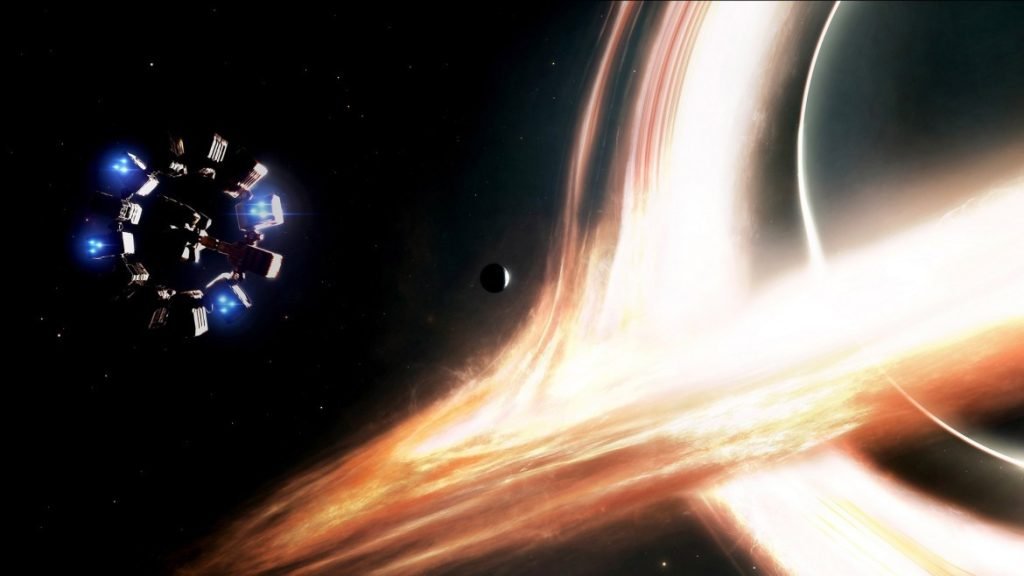
Interstellar Tunnels: From Imagination to Reality
Cosmic tunnels fuel both scientific curiosity and creative dreams. Sci-fi tales have long speculated about hidden corridors through space, and now, science is beginning to show how reality might parallel our wildest stories.
Conclusion: The Next Frontier in Cosmic Exploration
Interstellar tunnel discoveries, the marvel of the Local Hot Bubble, and revolutionary observations from eROSITA bring us closer to unraveling the blueprints of our universe. These hidden channels may shape energy, matter, and even the emergence of life across the galaxy, revealing just how intimately connected the cosmos truly is.
F.A.Q.
Unlike wormholes, interstellar tunnels are physical regions composed of energized gas and magnetic fields, observed through telescopes.
It stretches over 1,000 light-years, forming a protective shell around our Solar System.
No—these tunnels transport particles and energy, not spaceships.
eROSITA mapped vast cosmic filaments and bubbles, supporting the existence of interconnected galactic structures.
They can influence cosmic radiation and space weather, indirectly impacting satellites and communications.
